
Indoor LED Sphere Solutions in Kansas
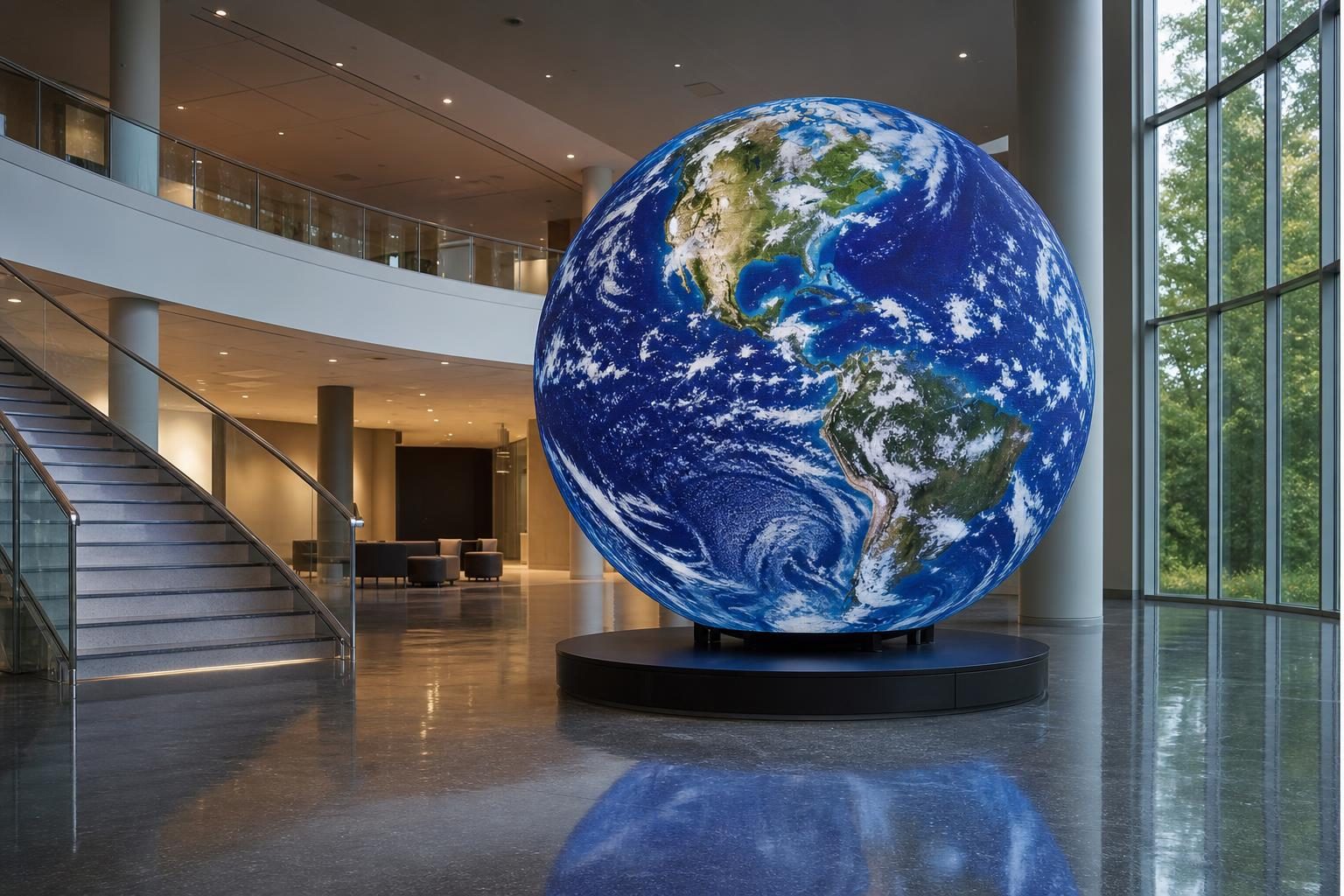
- Site Readiness: Check access routes for delivery—are doors, elevators, or stairs large enough? Pre-plan for assembly, especially in older buildings where entryways may be tight or loading docks far from final placement areas.
- Electrical Infrastructure: Coordinate with facilities teams to provide dedicated power circuits. Avoid overloading outlets and plan for safe cable routing to prevent tripping hazards and maintain aesthetics.
- Networking for Content Updates: If remote content management is desired, verify Wi-Fi or wired network availability in the installation area.
- Safety and ADA Compliance: Ensure the sphere and its mounting don’t impede required accessibility routes or exit paths.
Environmental and Lighting Factors
- Display Surface: Look for seamless construction for the best visual result—minimizing joins and reflections.
- Durability: Choose commercial-grade spheres with robust surfaces that resist scratches, smudges, or impact from incidental contact (particularly in public or educational settings).
- Contrast and Color Quality: The best spheres deliver deep blacks, vivid colors, and smooth gradients. Request performance samples if color accuracy is mission-critical.
- Brightness: Pick a model rated for your venue’s ambient conditions for all-day, all-season performance without visual fatigue.
Maintenance and Lifecycle Strategies
- Animated Kansas Landscapes: Looping video art of prairies, river valleys, or storm cells—reflecting the state’s diverse climate and beauty.
- Local Data Visualization: Live population, weather, or agricultural trends, rendered as interactive 3D graphics.
- STEM Demos: Kinetic models of tornadoes, planetary systems, or molecular structures for science museums, with visitor controls to adjust speed or scale.
- Event Highlights: Live or recapped images and video from city festivals, university milestones, or community celebrations.
- Branded Art Installations: Slideshows or motion graphics celebrating company cultures, donor recognition, or historical timelines.
- Kansas Wildlife Features: Rolling imagery of native birds, bison, or wildflowers, providing ambient content between events.
- Holiday and Seasonal Themes: Adapt visuals to reflect state fairs, Thanksgiving, winter festivities, or spring blooms—keeping the audience engaged year-round.
Planning & Procurement Checklist
For exterior venues or projects that need weather-rated spherical LED, compare our outdoor digital sphere solutions. Outdoor Digital Sphere.
Site Planning and Venue Fit
Successful deployment of an Indoor Digital Sphere starts with thorough site planning. Early-stage assessments reduce risk and streamline procurement. For buyers and project teams in Kansas, it is helpful to conduct an initial site walk-through with stakeholders from operations, facilities, AV, and public safety. The goal of that visit is to validate assumptions about sightlines, crowd flow, power availability, and mounting options before finalizing specifications.
For statewide business and development resources in Kansas, consult the Kansas Department of Commerce Kansas Department of Commerce.
Key venue fit considerations
- Sightlines and viewing zones: Map expected viewer positions and circulation paths to determine ideal sphere placement and orientation so messaging remains legible and impactful from primary vantage points.
- Ceiling and attachment points: Verify structural capacity for any overhead mounts or suspension systems and identify accessible attachment points. If ceiling suspension is not feasible, confirm acceptable floor-mounted or scaffolded alternatives.
- Clearances and ADA access: Confirm required clearances for egress, emergency access, and ADA-compliant routes around the install footprint. Sphere placement should not obstruct emergency exits or exceed permitted floor occupancy arrangements.
- Environmental conditions: Verify indoor environmental parameters such as temperature range, humidity control, and exposure to direct sunlight or HVAC diffusers that could affect display performance or viewer comfort.
- Acoustics and ambient noise: Evaluate how ambient sound levels and reverberation will influence any audio components and the way audiences interact with the display.
Pre-installation site checklist
- Completed site survey report (photos, annotated floor plans, measured clearances).
- Structural verification or sign-off for any overhead attachments when applicable.
- Designated staging and storage areas for crates and tools during installation.
- Named point of contact for the venue to coordinate deliveries and access permissions.
- List of existing AV and network equipment for integration planning.
Content Strategy and Experience Design
Hardware is only part of the visitor experience. A considered content strategy ensures the Indoor Digital Sphere becomes an operational asset that supports marketing, wayfinding, entertainment, and educational goals. Start content planning early so creative teams and technical integrators can build to compatible specifications.
For retail and architectural applications where transparency is part of the experience, see our transparent OLED display solutions. Transparent OLED Display.
Defining objectives and audience segments
- Identify primary objectives: Brand awareness, revenue generation, information dissemination, or immersive storytelling. Objectives shape content frequency, format, and interaction design.
- Segment audiences: Public visitors, private-event attendees, children, or accessibility-focused visitors each have distinct needs. Plan content that addresses multiple segments without compromising clarity.
- Measurement goals: Define KPIs up front (dwell time, engagement events, conversion metrics) and ensure the delivery system supports logging and analytics.
Content production and formats
- Resolution and aspect considerations: Sphere surfaces and curvature change perceived geometry. Deliver content creators reference templates and test renders to preview how flat assets will map to the spherical surface.
- Motion and pacing: High-motion content can be engaging but may cause discomfort if viewed up close. Combine dynamic sequences with calm and legible content for long-dwell areas.
- Interactive and timed campaigns: If the sphere will host scheduled content (e.g., daily programming or event-driven loops), design a schedule that balances promotional and informational material.
- Localization: For multi-language environments or region-specific promotions, build a workflow for managing localized assets and approvals.
Content operations and governance
- Workflow for approvals: Define who reviews and signs off on creative, branding, and accessibility checks prior to publishing.
- Asset library and version control: Maintain a centralized repository with naming conventions, master files, and export-ready versions for the sphere.
- Scheduling and playlists: Use content-management tools that support time-of-day scheduling, event overrides, and emergency broadcast interrupts if required by the venue.
- Analytics and optimization: Implement metrics collection to evaluate content performance and iterate on creative based on real-world engagement data.
Operational Considerations and Risk Mitigation
Operational readiness extends beyond installation. Address security, safety, and policy questions to ensure the sphere remains a reliable part of venue operations.
Security and access control
- Network segmentation: Where content systems are connected to venue networks, use segmentation and secure authentication to protect operational systems from broader network risks.
- Physical access: Restrict access to service panels and control hardware to authorized personnel only. Use lockable enclosures and procedural sign-in/out when maintenance is required.
- Content governance: Implement approval workflows for content publication to avoid accidental or inappropriate material appearing on a high-visibility asset.
Safety and emergency procedures
- Emergency power down: Define clear procedures for power-cut scenarios, both local and remote, and ensure staff know how to safely disable the system in emergencies.
- Fire and egress plans: Ensure the installation does not obstruct fire suppression systems or egress routes and that first responders can access and navigate the area if needed.
- Incident drills: Include the sphere in routine venue emergency drills to confirm that its presence does not create unforeseen hazards during evacuations.
LEDDisplayWarehouse.com sells LED display products. Contact us through our contact form to ask questions or request a quote.