
Indoor LED Sphere Solutions in Washington
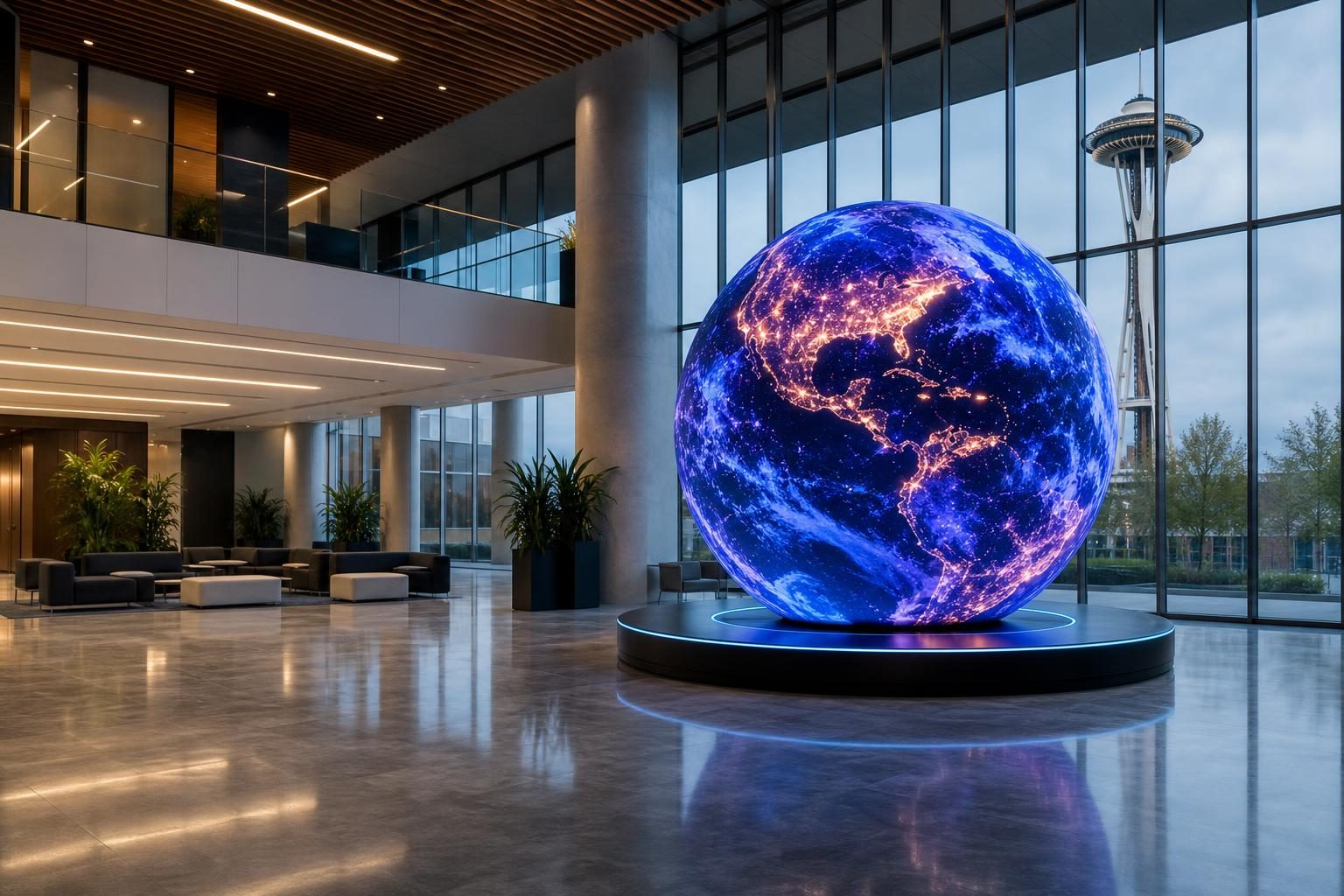
Indoor digital spheres are a cutting-edge way for Washington venues to transform ordinary environments into highly immersive visual experiences. These innovative displays make it possible for digital content—motion graphics, branding, or educational narratives—to be presented on every side of a radiant, three-dimensional sphere. From the bustling technology campuses of Seattle to the state’s diverse science centers, retail flagships in Bellevue, or convention spaces in Spokane, indoor LED spheres can become signature elements that foster interaction, spark curiosity, and invite memorable engagement.
Why Choose an Indoor Digital Sphere in Washington?
Washington is a hub of innovation and creativity, attracting forward-thinking organizations that want to distinguish their spaces, attract guests, and foster immersive storytelling. An indoor digital sphere sets the stage for these goals, serving as a striking centerpiece or functional display in a wide spectrum of environments:
- Corporate Lobbies and Campuses: High-growth businesses and technology firms can showcase real-time data, company heritage, or interactive media in an inspiring focal point that enhances visitor impressions and employee pride.
- Museums and Science Centers: Visualize planetary data, geography, or scientific concepts with animated globe simulations, earth sciences, or global culture exhibits—ideal for engaging student groups or family visitors in an unforgettable format.
- Convention and Event Spaces: Become the standout gathering point or sponsor highlight at trade shows, expos, and annual meetings by delivering immersive, 360-degree content visible from every angle.
- Hospitality Environments: Transform hotel lobbies or entertainment complexes with digital art, seasonal programming, or interactive directories that reflect the vibrant spirit of their Washington communities.
What sets the indoor digital sphere apart is its ability to deliver content in a truly multi-angle, attention-grabbing format. Instead of a flat image that faces one direction, content wraps the structure, engaging all who pass by and inviting them to experience media in motion from multiple perspectives. In Washington’s competitive visual landscape—where technology, design, and culture converge—these qualities are invaluable for venues striving to make a memorable impact.
Key Applications Across Washington Venues
Understanding where and how digital spheres are used can help organizations grasp their true value. In Washington, common applications include:
- Tech Headquarters: Foster brand culture, celebrate milestones, and present live data feeds—all in the heart of lobbies or collaboration centers.
- Higher Education: Create interactive worlds for student engagement or showcase campus research through dynamic visual storytelling in atriums or student centers.
- Public Spaces: Welcome travelers in transportation hubs (like airports or ferry terminals) or energize civic centers by presenting regional maps, weather, or local highlights.
- Retail Flagships: Present brand stories, product launches, or instant social media feeds in a way that’s impossible to miss—and perfect for social sharing.
- Exhibitions and Pop-Ups: Offer interactive, programmable focal points for short-term installations, gallery events, or science fairs.
Selection Guidance for Indoor Digital Spheres
Choosing the right indoor digital sphere for your venue involves balancing technical considerations with design vision. Here are stepwise guidance points tailored for Washington properties:
- Define the Space: Measure ceiling heights, floor space, and guest circulation paths. Spheres call for central placement and ample clearances for maximum effect.
- Select the Diameter: Typical sphere sizes range from under three feet to several meters across. Small spheres may suit intimate lobbies or galleries, while larger diameters perform best in spacious atriums or exhibit halls.
- Assess Viewing Distances: Organizations should define the closest and farthest typical viewing points. Closer audiences require finer image resolution for crisp, detailed visuals.
- Plan Content Formats: Spherical displays demand unique media. Collaborate early with designers or animators who understand seamless 360-degree layouts so your intended content (maps, animations, infographics) wraps fluidly around the sphere without distortion.
- Verify Mounting Needs: Will the sphere be suspended, mounted on a pedestal, or integrated architecturally? Structural engineers may need to validate that mounting points can support the weight and allow for service access.
- Review Environmental Conditions: Consider HVAC, lighting, and audience exposure—Washington venues often have variable daylight. Spheres perform best where ambient light does not overpower the display’s visual output.
- Ensure Accessibility: Plan unobstructed access paths for future troubleshooting, service, or component replacement.
- Coordinate Power and Data: Plan for sufficient nearby power circuits, cable management, and network connections aligned with building codes and IT requirements.
Installation and Planning Considerations
Careful planning underpins every successful sphere installation in Washington. Here are best practices and checklist items to navigate the process:
- Site Survey: Conduct in-depth measurements of installation zones, load paths, and ceiling/floor strengths. Double-check delivery path clearances, elevator specs, and entryways for oversized components.
- Plan for Approvals: Secure necessary venue, building, and, if required, city permits. Many public and high-profile venues require documentation and compliance with state or local safety codes.
- Schedule Carefully: Washington’s event calendar, academic schedules, or busy tourism seasons can impact installation timelines. Schedule for off-peak windows and account for site access or weather-related delivery concerns.
- Pre-Install Coordination: Share electrical, data, and HVAC requirements with the venue management in advance. Preparation avoids costly on-site changes and downtime.
- Test Content Early: Prototype critical content to verify color balance, movement, and legibility before sphere assembly. Spherical displays handle distortion differently than standard screens.
- Staging and Testing: Allocate time for pre-opening testing under live lighting conditions. Validate mounting, content synchronization, and network integration thoroughly.
By following these steps, you reduce the risk of delays, change-orders, or post-install adjustments.
Material and Performance Considerations
Beyond visual impact, consider the following practical product characteristics when specifying a digital sphere for Washington projects:
- Color Accuracy: Specify displays capable of broad color gamuts so Pacific Northwest imagery—forests, ocean, skies—appear vibrant and true-to-life.
- Brightness: Aim for adjustable output to adapt to interior daylight fluctuations, especially in venues with skylights or glass architecture.
- Durability: Ensure indoor sphere surfaces resist minor impacts, fingerprints, or dust buildup common in public spaces. Easy-clean materials simplify maintenance.
- Energy Efficiency: Choose models with efficient power draw.
- Audio Integration (if needed): For spheres used as interactive exhibits or immersive art pieces, plan where (and how) speakers or ambient sound sources are introduced to enrich visual media without detracting from the setting.
Content Development for Washington Contexts
What your audience will see on the sphere is as important as the hardware itself. Here are common Washington-focused content strategies:
- Landscape Animations: Cycle through majestic views of the Cascades, Mount Rainier, or coastlines for an immediate sense of local identity.
- Data Visualizations: Showcase real-time transit updates, event schedules, or interactive timelines for academic campuses and event venues.
- Interactive Touch Integration: Consider optional touchpoints (nearby kiosks or mobile triggers) to let audiences explore custom spheres, such as rotating 3D maps or science demos.
- Seasonal Programs: Update with regionally tailored content—from cherry blossom animations in spring to light festivals or Seahawks game-day graphics in fall and winter.
- Institutional Storylines: For universities, spheres can chronicle milestones, research achievements, or donor recognition in ways that feel elevated and participatory.
Custom media workflows are essential, as traditional rectangular content must be adapted for wrap-around, seamless projection.
Comparison Guide: Indoor Digital Sphere vs. Traditional Digital Displays
| Feature | Indoor Digital Sphere | Flat Digital Display |
|---|---|---|
| Viewing Angle | 360-degree engagement | Limited to direction faced |
| Visual Appeal | Unique, iconic, immersive | Familiar, conventional |
| Content Complexity | Custom spherical, requires special design | Standard flat media |
| Install Requirements | Central space, unique mount | Wall or stand |
| Audience Impact | Memorable, conversation-driving | Routine |
Maintenance Considerations
Ongoing maintenance ensures that your digital sphere remains functional and visually compelling. Key tips for Washington venues include:
- Set a maintenance schedule—regular inspections, light cleaning, and software updates help catch issues early.
- Plan for internal access zones—technicians should be able to reach inside the sphere or its mounting system for safe troubleshooting or repairs.
- Document every hardware and software component for easy reordering and support.
- Provide basic training to on-site staff for simple faults, restarts, or resetting content schedules.
Consistent care can help prevent downtime and sustain audience engagement during high-profile periods and busy event calendars.
Common Planning Mistakes to Avoid
- Overlooking Content Needs: Spherical displays require specifically prepared content; converting standard media usually results in errors or distortion.
- Insufficient Structural Review: Not verifying architectural supports for heavy or suspended installations risks delays and redesign.
- Underestimating Power/Data: Last-minute changes to power supply, circuit capacity, or data cabling can add cost and time.
- Forgetting Ongoing Access: Failure to plan for easy service access can make simple maintenance much more complicated than necessary.
- Poor Stakeholder Communication: Early project buy-in (especially for public or university venues) is crucial; late feedback often prompts costly reconsiderations.
- Neglecting Real-World Schedules: Installation should avoid conflict with peak events, seasonal rushes, or academic start/end periods.
Emerging Trends in Indoor Digital Sphere Technology
- Increasing demand for interactive, touch-enabled or motion-responsive spheres.
- Growth in real-time data integration to show live information, dynamic maps, or social media streams.
- More sustainable products that lower energy consumption, in line with the Pacific Northwest’s environmental priorities.
- Advanced content management systems with easier drag-and-drop interface for custom media uploads.
- Expanded use across unexpected sectors—higher education, healthcare, and local government storytelling.
Staying ahead of these trends positions Washington venues to offer compelling, future-ready digital experiences.
Frequently Asked Questions
- Are indoor digital spheres meant for any indoor space?
- They are primarily intended for spacious, climate-controlled interiors—venues with clear sightlines benefit most from the immersive format.
- How do I start planning for my space?
- Gather photos, dimensions, and any existing AV or tech documentation. Clarify audience numbers, access points, and intended content early for the most accurate proposals.
- Can I display live updates or dynamic data?
- Yes—sphere controllers support scheduled content, live social feeds, event schedules, and animated data. Integration should be planned with your IT or AV team.
Start Your Indoor Digital Sphere Project in Washington
When you’re ready to explore the possibilities for indoor digital spheres in Washington, gather the following details to streamline your inquiry:
- City or region within Washington
- Venue type: corporate, education, science, hospitality, retail, or other
- Primary intended audience and estimated foot traffic
- Planned sphere location (atrium, lobby, exhibit, event space)
- Desired sphere size (diameter) if known
- Typical content types (live data, animation, branding, etc.)
- Any technical, mounting, or integration questions
- Contact information for timely follow-up
Each project in Washington is unique, shaped by the region’s diverse architecture, ambitious event calendars, and emphasis on experiential storytelling. Request Indoor LED Sphere Information to initiate your planning and learn about the technical possibilities for your venue.
To ask questions or request a quote, please contact LEDDisplayWarehouse.com.
Cities We Serve
Choose your city
- Indoor Digital Spheres in Auburn, Washington
- Indoor Digital Spheres in Bellevue, Washington
- Indoor Digital Spheres in Bellingham, Washington
- Indoor Digital Spheres in Everett, Washington
- Indoor Digital Spheres in Federal Way, Washington
- Indoor Digital Spheres in Kennewick, Washington
- Indoor Digital Spheres in Kent, Washington
- Indoor Digital Spheres in Kirkland, Washington
- Indoor Digital Spheres in Marysville, Washington
- Indoor Digital Spheres in Pasco, Washington
- Indoor Digital Spheres in Redmond, Washington
- Indoor Digital Spheres in Renton, Washington
- Indoor Digital Spheres in Seattle, Washington
- Indoor Digital Spheres in Spokane Valley, Washington
- Indoor Digital Spheres in Spokane, Washington
- Indoor Digital Spheres in Tacoma, Washington
- Indoor Digital Spheres in Vancouver, Washington
- Indoor Digital Spheres in Yakima, Washington