
Indoor LED Sphere Solutions in West Virginia
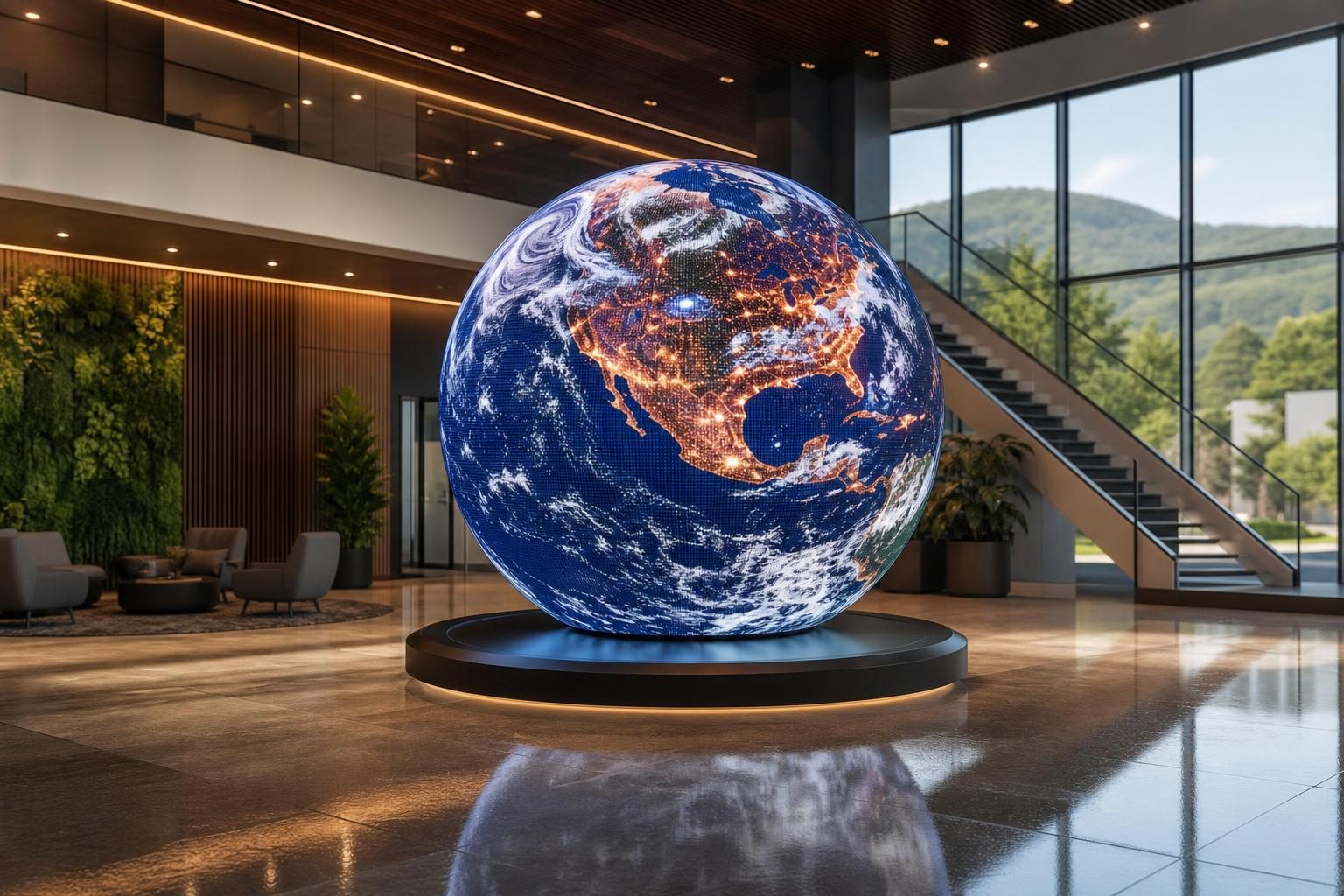
For organizations, institutions, and innovators throughout West Virginia, the indoor digital sphere represents a compelling step forward in how technology and creativity converge to redefine interior spaces. Whether you’re planning an awe-inspiring entrance for a university, orchestrating memorable moments at a convention or event, enhancing public engagement in a museum, or seeking a visually captivating element for corporate and hospitality environments, the indoor digital sphere offers unique versatility. Its full 360-degree display surface captures the imagination from every viewpoint, creating opportunities for immersive storytelling, branded presentations, data visualization, and interactive engagement. Realizing the benefits of this technology, however, requires thoughtful planning—from careful venue assessment to specialized content development—ensuring the final installation not only fits but enhances its environment while captivating audiences.
Key Advantages of Indoor Digital Spheres in West Virginia
- High Visual Impact: The seamless, curved display of an indoor digital sphere naturally draws attention, making it a striking centerpiece in any space—ideal for attracting and holding visitor interest.
- Immersive and Engaging Content: One of the most powerful attributes is the ability to display dynamic, motion-rich visuals that wrap around the sphere, enabling storytelling at a new dimensional level.
- Flexible Application: The spheres can be adapted for branding, education, real-time data, art installations, or wayfinding, providing broad value across multiple sectors in West Virginia—from hospitality to academia and beyond.
- Enhances Ambiance and Identity: For businesses and institutions, it reinforces brand identity or mission while transforming the atmosphere of lobbies, exhibit halls, and common spaces.
- Encourages Social Sharing: Visually arresting digital spheres often become focal points that visitors photograph and share, amplifying reach for events, campaigns, and venues.
Popular Applications for Indoor Digital Spheres in West Virginia
Academic and University Environments
West Virginia’s rich network of universities and educational institutions are particularly well-suited for employing digital spheres. In student centers, library atriums, or research halls, the sphere can serve as a hub for campus updates, student achievements, and information about extracurricular opportunities. For STEM facilities, the sphere’s ability to display planetary models, geospatial maps, or interactive data visualizations can turn routine environments into exploratory hubs, inspiring curiosity and conversation among students, faculty, and visitors alike.
Museums, Science Centers, and Cultural Institutions
Museums and exhibit-driven venues in West Virginia increasingly look for engaging ways to connect with diverse audiences. Digital spheres facilitate animated exhibits—such as showing time-lapse environmental changes, historical transformations, or real-time weather and climate models. This tangible, constantly updating display format provides a stronger sense of place and immediacy compared to traditional static displays. Furthermore, the sphere’s all-around visibility allows groups to gather and participate without crowding a single screen, giving educators and guides a useful tool for dynamic presentations.
Lobby and Reception Spaces for Businesses and Hotels
An indoor digital sphere transforms any corporate reception area or hospitality entrance from simply functional to undeniably memorable. For hotels, the sphere can showcase welcoming messages, event schedules, local weather, or artistic visuals that enhance the guest experience. Businesses and co-working spaces can utilize the sphere for employee milestones, community highlights, client welcomes, or even interactive directories—a modern upgrade on conventional digital signage.
Public and Civic Buildings
Government and public organizations can leverage indoor digital spheres to present public service announcements, promote regional campaigns, honor civic achievements, or support awareness initiatives. The adaptability of the content makes these installations fit for seasonal campaigns, emergency alerts, or ongoing educational features that reach broad audiences across demographic lines.
Event Venues, Trade Shows, and Conference Centers
Event organizers seeking to make lasting impressions during conventions, galas, trade shows, or festivals can use digital spheres as interactive hubs, event countdowns, product showcases, or attendee engagement points. The unique spatial presence and programmable display zones accommodate agenda highlights, sponsor loops, or live social media feeds, helping to maximize value for both organizers and participants.
Guidance on Selecting the Right Indoor Digital Sphere
Adding a digital sphere to your West Virginia venue requires balancing several technical and aesthetic considerations. Key questions to ask during selection include:
- Appropriate Diameter: Consider the optimal viewing distances in your space. Spheres range in size from desktop or standalone accent features up to several meters in diameter for atrium installations.
- Content Format and Workflow: What types of content will you display? Will you need custom looping animations, live data visualization, or scheduled event updates? Assess your in-house content creation capabilities or plan for third-party creative support.
- Mounting and Placement: Can the sphere be safely suspended from a ceiling, or is a floor-standing or integrated architectural support required? Evaluate flooring load, ceiling height, and access for both installation and maintenance.
- Technical Compatibility: Ensure your venue’s power supply, networking capacity, and environmental conditions (temperature, humidity, lighting) match the product’s requirements and performance specifications.
- Audience Profile and Routine Usage: Who will interact with the sphere? Will it be displayed continuously or on a programmed schedule?
- Ongoing Support and Maintenance: Assign responsibility for checking, updating, and cleaning the sphere on an ongoing basis to preserve display quality and minimize downtime.
Installation and Planning Considerations
Installing an indoor digital sphere is a multi-phase project requiring coordination across design, engineering, operations, and creative teams. Steps include:
- Initial Site Assessment: Document floorplans, ceiling heights, structural features, and audience pathways. Identify potential obstacles to sightlines and traffic flow.
- Electrical and Network Needs: Plan safe, code-compliant routing of power and network connectivity to the display. Confirm backup or surge protection if required.
- Mounting and Structural Integration: Evaluate installation method options—such as ground-supported bases, architectural framework integration, or overhead suspension. Secure necessary building approvals and hire qualified installers.
- Content System Setup: Determine media sources, control software, and workflow for updating sphere visuals remotely or on-site. For scheduled venues, consider automation capabilities.
- Environmental Optimization: Address indoor lighting (both natural and artificial) so visuals remain vivid and easily visible at all times of day.
- Project Management and Timeline: Coordinate all timelines so installation and commissioning align with venue opening dates or event deadlines. Build in time for pre-installation testing and training sessions for venue staff.
Environmental and Lighting Considerations
The appearance and effectiveness of an indoor digital sphere depend heavily on the surrounding space’s lighting conditions. Ambient daylight, overhead fixtures, and accent lighting all impact visual vibrance and clarity. Flowing daylight is common in atriums, university lobbies, and event spaces in West Virginia; therefore, positioning the sphere away from direct sunlight or optimizing screen brightness for ambient conditions is critical. Dimmable lighting systems can boost legibility during presentations, while architectural accent lighting enhances the sphere’s prominence after dark.
Material and Performance Criteria
- Enclosure Durability: Choose a sphere model with a protective finish and sturdy frame suitable for high-traffic settings, especially where accidental contact or cleaning is likely.
- Thermal Management: Ensure appropriate ventilation or cooling, especially in enclosed spaces or active venues, to maintain display performance.
- Visual Quality: Prioritize models offering crisp image reproduction, high contrast, and even luminance across the sphere’s entire surface.
Content Programming Tips for Maximum Engagement
- Regional Storytelling: Integrate West Virginia themes, such as abstracted Appalachian scenery, wildlife, or historical motifs, to evoke a sense of place and community connection.
- Multi-Layered Animations: Loop motion graphics that unfold around the sphere to encourage repeated viewing from various vantage points.
- Dynamic Data Visuals: Update live feeds or event-based information—such as visitor metrics, weather patterns, or science experiments—for real-time relevance.
- User-Driven Interactivity: If supported, allow mobile device integration or sensors to let visitors influence what is displayed, deepening engagement and personalization.
- Event-Specific Campaigns: Customize content for key dates—such as commencement ceremonies, seasonal celebrations, or tourism milestones—maximizing impact during peak attendance periods.
Maintenance and Care for Indoor Digital Spheres
- Regular Cleaning: Use non-abrasive cloths and appropriate cleaners to preserve clarity and avoid surface damage, following manufacturer instructions for access panels and sensitive components.
- Scheduled Inspections: Check display integrity, mounting hardware, and electronic connections routinely, addressing any degradation or malfunctions proactively.
- Content System Updates: Ensure playback systems and software are periodically updated for security, new features, and compatibility with evolving content formats.
- Operational Training: Prepare venue staff or designated personnel with training on activating, cycling content, troubleshooting, and performing basic maintenance tasks.
Practical Buying Criteria
- Define Your Primary Purpose: Clarify whether the sphere will focus on education, branding, interactivity, or artistic display to narrow options.
- Confirm Venue Readiness: Assess all space, infrastructure, and access details well before procurement.
- Review Total Cost of Ownership: Consider not just upfront costs, but installation, content development, maintenance, and power usage over time.
- Assess Service and Support Availability: Confirm support provisions, including response times and service level agreements, especially important for venues hosting high-profile or frequent events in West Virginia.
Comparison Table: Indoor LED Sphere vs. Traditional Flat LED Display
| Feature | Indoor LED Sphere | Flat LED Display |
|---|---|---|
| Viewing Angles | 360-degree, multi-angle visibility | Primarily front-facing |
| Visual Impact | Immersive, iconic centerpiece | Standard wall-mounted presence |
| Content Format | Mapped, motion, or panoramic visuals | Standard video/images |
| Space Requirements | Central or open space, visible all around | Wall or column space |
| Audience Engagement | High—encourages movement, interaction | Stationary viewing |
Common Mistakes to Avoid
- Neglecting Content Preparation: Crafting immersive, effective spherical visuals takes more time and expertise than traditional signage; allocate resources for design, rendering, and testing.
- Ignoring Environmental Integration: Not all sites are equal. Overlooking acoustic, lighting, and space considerations can detract from the impact of a digital sphere.
- Insufficient Installation Planning: A rushed or under-resourced installation can lead to technical difficulties and long-term maintenance headaches.
- Choosing the Wrong Size: Oversized spheres may dominate small spaces, while undersized options can be lost in large atriums—knowing the balance is key.
- Overlooking Routine Care: Lack of regular cleaning or technical oversight may reduce operational life or visual quality.
Future Trends in Indoor Digital Spheres
- Increased Interactivity: As software advances, future spheres may support multi-user control or touchless interactions, fostering even deeper audience engagement.
- Higher Resolution and Finer Detailing: Technology improvements continue to refine visual sharpness, allowing for more detailed graphics, vibrant color gradients, and realistic renderings—even at close range.
- Expanded Content Integration: Integration with real-time data streams, social media, or scenario-based triggers promises more adaptive and responsive content experiences.
- Sustainability Focus: Evolving hardware efficiency and smart power management support eco-friendly facility goals.
Frequently Asked Questions
- How can venues in West Virginia customize sphere content?
- Content can be tailored for local culture, events, branding, or educational purposes. Work with creative teams or media agencies experienced in spherical content mapping for best effect.
- Does installation require special electrical or network preparation?
- Yes, you must coordinate with facilities staff to ensure appropriate electrical load, safe routing, and, if needed, secured network access in compliance with local codes and building policies.
- Can the sphere operate independently or as part of a larger system?
- Depending on configuration, spheres may be run standalone via local control or integrated with building management and AV systems for centralized control and scheduling.
- How do you manage or update content after installation?
- Content management systems or designated control media are used to update visuals, schedules, and special campaigns, either remotely or on-site, per organizational workflow and permissions.
- What’s the average installation timeline?
- Lead times vary based on product specification, custom content creation, and venue readiness, but planning some weeks to several months is common, especially for large or custom installations.
- Who is responsible for ongoing maintenance?
- This is typically assigned to venue facilities staff or a designated AV team, with external support as needed—plan maintenance schedules during project kickoff.
Next Steps: Plan Your Indoor Digital Sphere Project
If you’re ready to elevate your West Virginia venue with an indoor digital sphere, compile core information to kick off your project planning. This includes your campus, organization, or venue name; indoor location and space dimensions; intended use case and content ideas; desired project timeline and budget framework; and any relevant delivery, installation, or regulatory considerations. Open communication and thorough planning are the keys to achieving a seamless installation and maximum visual impact.
To learn more or to start planning, visit the official website and request to connect with a specialist. Provide as much detail as possible—including city, venue type, preferred sphere size, main content concepts, and any operational questions. Experts are ready to support your vision, ensuring your venue in West Virginia makes a bold and lasting impression with the transformative power of an indoor digital sphere.