
Indoor Digital Sphere in New York
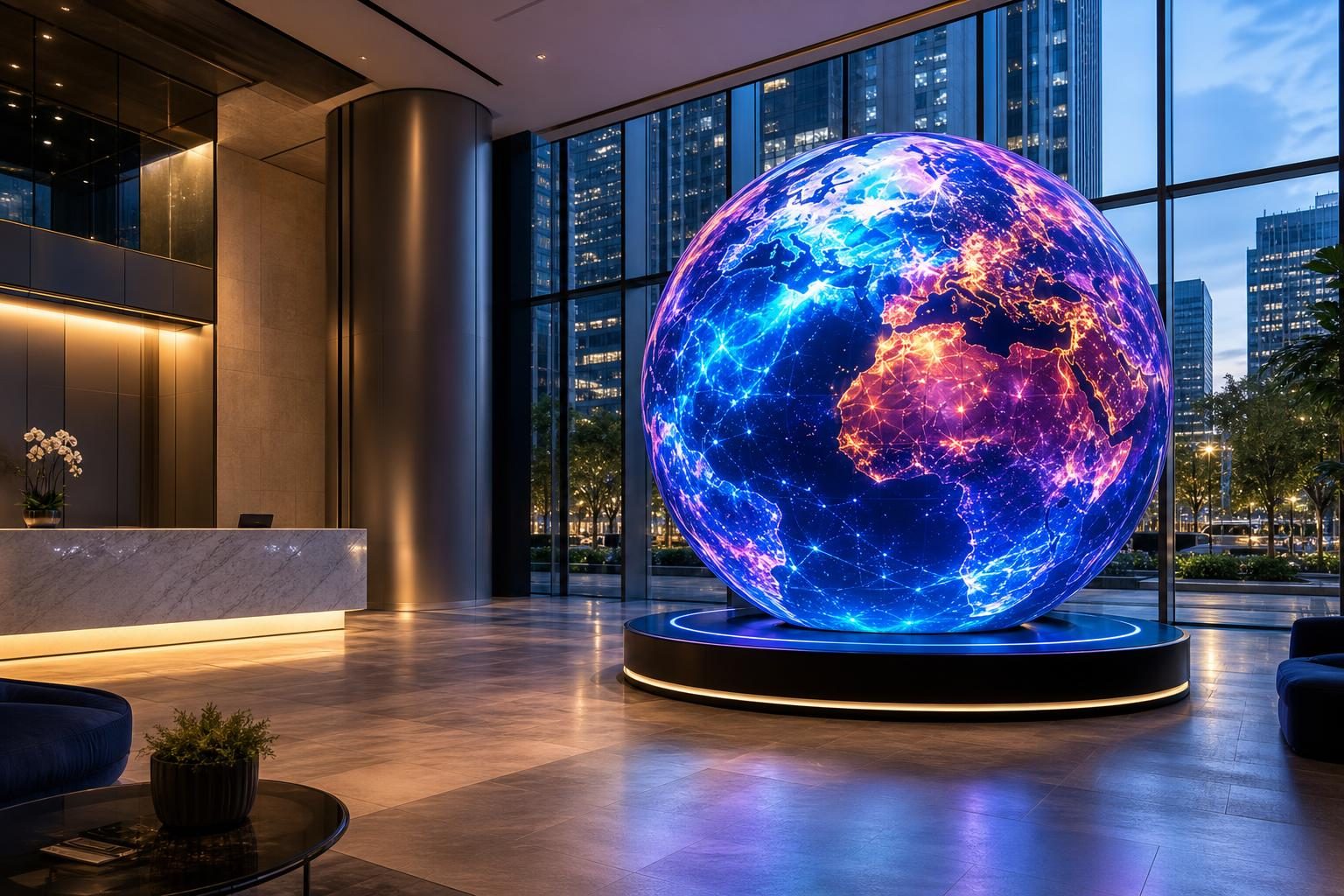
Innovative venues and organizations across New York are embracing advanced visual technologies to create immersive, memorable experiences for guests, audiences, and visitors. An indoor digital sphere—sometimes called an indoor LED sphere or spherical LED display—delivers captivating digital content on a seamless, globe-like canvas visible from multiple directions. In New York’s dynamic landscape of entertainment, retail, museum, educational, and corporate environments, these digital spheres offer unique opportunities to inform, inspire, and engage. Whether for branding, art, data visualization, or wayfinding, configuration should fit the specific project and space.
Indoor Digital Spheres: Transforming New York’s Interior Environments
As New York’s built environment evolves, architects and facility managers are searching for visually dynamic solutions that complement both historic and contemporary styles. The indoor digital sphere stands out because of its ability to attract attention, draw crowds, and envelop viewers in a 360-degree visual experience. These installations have become synonymous with innovation, providing a sense of technological advancement that resonates with New York’s ethos.
Unlike conventional displays, an indoor digital sphere provides a three-dimensional surface for content, making it possible to display wraparound media that can be seen from nearly any vantage point in the room. This not only maximizes audience exposure but allows for truly adaptive content strategies—rotating news, time-sensitive messaging, interactive exhibits, and brand storytelling—all while retaining a sculptural and architectural allure.
Why Consider an Indoor Digital Sphere in New York?
New York’s variety of public-facing spaces—from bustling Manhattan skyscraper lobbies to universities in upstate regions—demands differentiated visual solutions. An indoor digital sphere makes a powerful impression as a focal point in spaces where traditional flat displays can be limiting. Visible from almost any angle, the sphere is ideal for presenting dynamic content such as promotional loops, animated art, educational media, or event messaging. This form factor supports both local and international audiences, energizing high-traffic environments including trade shows, convention centers, museums, and destination retail.
Special event venues in cities like New York City, Buffalo, Rochester, and Albany may use digital spheres to anchor immersive environments, while cultural institutions leverage them for interactive or educational storytelling. Organizations seeking to distinguish their space and provide unique digital engagement benefit from the creative flexibility and visual impact an indoor sphere provides.
Key Applications and Use Cases for Indoor Digital Spheres in New York
- Convention and Event Spaces: Integrate the sphere as a dynamic welcome element in lobbies or central event areas. Use scheduled content cycles for sponsor highlights, attendee information, wayfinding maps, countdowns, or live updates. Planners should assess ceiling height, rigging options, and circulation flows for efficient integration.
- Museums and Science Centers: Spheres serve as immersive educational platforms, displaying astronomical simulations, globe-spanning data visualizations, historical timelines, or digital mosaics. They enhance STEAM exhibits, engaging school groups, families, and lifelong learners.
- Retail and Flagship Stores: Utilize spheres as dramatic showpieces for product launches, digital art installations, interactive campaigns, or even themed seasonal promotions. The sphere’s movement and color palette can be coordinated to brand identity and in-store events.
- Corporate Headquarters and Innovation Centers: Use the sphere to express company values, global reach, or real-time business analytics. Spheres in atria or conference centers can reinforce organizational identity and inspire both employees and visitors.
- Universities and Campus Facilities: Display campus news, student highlights, academic calendars, or even social media feeds. Spheres foster a sense of community and serve as attention-grabbing orientation landmarks within central buildings.
- Hospitality and Luxury Hotels: Make receptions memorable by providing an experiential art piece. Content may shift between tranquil abstract visuals and function-specific information to support guest events and lobby ambiance.
- Airport Lounges and Transit Hubs: Share weather data, arrival times, global destinations, or calming art that reduces travel stress. Interactive display modes can provide touchless information or regional storytelling.
Guidance on Selection and Planning
Careful planning ensures the chosen indoor digital sphere delivers both technical performance and experiential value. Below are important selection criteria:
- Size and Scale: Select a diameter that offers maximum visibility for the space without blocking sightlines or overdominance.
- Resolution: Consider the detailed definition needed at primary viewing distances. High-resolution spheres suit galleries or retail, while broader pixel arrangements may fit large lobbies.
- Mounting Approach: Assess the suitability of ceiling suspension, pedestal mounting, or integration with existing structures. Each option has unique engineering and aesthetic considerations.
- Content Management: Choose a system that allows easy scheduling and updates, with secure access for staff or curators. Integration with automation platforms is a plus.
- Lighting and Environment: Evaluate ambient lighting—natural light from windows or spotlights—to ensure content remains vivid and visible throughout the day.
- Accessibility for Maintenance: Design with future servicing in mind, providing clear access routes and minimizing disruption to daily operations.
Environmental and Lighting Considerations
To maximize the impact of an indoor digital sphere, venue planners must consider ambient lighting and potential sources of glare or shadow. In New York, many venues feature tall glass facades or exhibit areas with variable natural light. Spheres must therefore be specified with display brightness and color range capable of overcoming ambient light conditions while avoiding eye strain.
Additionally, planners should factor in HVAC systems to ensure consistent operating temperatures and proper airflow around the installation, which is especially relevant for large venues with high occupancy periods. How the lighting interacts with the digital content will influence its effectiveness—the most successful installations offer a harmonious blend of digital and architectural illumination.
Material and Performance Considerations
The choice of materials and display hardware in indoor digital spheres affects not only visual performance but also durability and safety. Quality construction ensures seamless image presentation and resistance to accidental impacts or environmental shifts.
Buyers should confirm that the selected solution uses robust internal framing, secure mounting hardware, and suitable surface treatments to prevent reflections or wear. Additionally, performance specifications (such as refresh rate and brightness) must align with the venue’s usage—be it fast-moving video, subtle art loops, or detailed statistical dashboards.
Maintenance and Longevity
A properly planned maintenance routine is critical to ensure ongoing performance and visual consistency from the digital sphere. Key maintenance elements include:
- Documented access points for repair or cleaning, minimizing downtime during servicing.
- Monitoring tools for display health and automated alerting for any irregularities.
- Regular cleaning schedules—using non-abrasive tools and approved solutions to maintain image clarity and avoid surface degradation.
- Clear communication protocols between venue staff and service experts for troubleshooting, updates, and lifecycle planning.
Maintenance planning from the outset helps extend the lifetime value of the installation, avoid unexpected costs, and keep content looking its best year-round in busy New York settings.
Buying Criteria and Comparison
When you begin comparing indoor digital sphere products, consider rating potential options by:
- Visual Performance: Image vibrancy, color accuracy, and contrast in venue-representative lighting scenarios.
- Physical Integrity: Quality of build, stability under regular use, and long-term durability within high-traffic locations.
- Content Flexibility: Ease of uploading, scheduling, and varying types of content (video, graphics, live feeds, etc.)
- Total Cost of Ownership: Calculated over a projected service life, factoring in installation, operation, and eventual upgrades or replacements.
Comparison Table: Indoor Digital Sphere Planning Factors
| Factor | Why It Matters | Planning Guidance |
|---|---|---|
| Diameter / Size | Determines visual impact and viewing area | Match to available floor or ceiling space and audience proximity |
| Pixel Pitch | Controls image detail and viewing comfort | Select finer pitch for up-close viewing situations |
| Mounting Method | Affects safety, aesthetics, and installation scope | Coordinate with venue’s structural engineer for support |
| Content Format | Ensures correct playback and visual integrity | Confirm format compatibility with the solutions team |
| Operational Workflow | Influences staffing and scheduling | Plan for content updates, approvals, and long-term maintenance |
Common Applications: New York Sector Examples
- Tourism and Destination Centers: Use globe animations to highlight world connections or welcome visitors in multiple languages.
- Financial District Lobbies: Visualize market movements or global economic data for brokers and international guests.
- Performing Arts Centers: Countdown to curtain calls, showcase artist visuals, or celebrate donors and sponsors in an eye-catching fashion.
Typical Planning Timeline for Digital Sphere Projects
- Conceptualization: From initial goals and functional needs to visual inspiration and stakeholder alignment.
- Site Survey: Physical assessment to gather measurements and infrastructure details.
- Design and Specification: Defining technical requirements, approval of size and finish, mockups, and renderings.
- Procurement and Fabrication: Order placement, manufacturing, and logistics scheduling.
- Pre-install Coordination: Site prep, staff briefings, delivery routes, and staging plans.
- Content Loading: Uploading all initial media, testing playback, and refining schedules.
- Launch: Public unveiling and transition to regular operation.
Content Ideas for New York Venues and Organizations
Indoor digital spheres unlock a variety of creative opportunities for New York’s diverse interior environments. Example content types include:
- Abstract digital motion inspired by city lights or changing seasons in New York
- Brand story loops reflecting organizational identity
- Event announcements or program highlights for conferences or art festivals
- Science visualizations, planetary animations, or weather systems for museums
- Product showcases and campaign visuals for flagship retail stores
- Tourism or destination storytelling for hospitality and transit hubs
- Data-driven or thematic graphics—subject to system capability confirmation
- Seasonal celebrations, holiday greetings, or abstract celebrations for public and private events
Review the technical specifications to ensure your preferred content format aligns with platform capabilities, and plan ahead for major seasonal campaigns or major local events that offer opportunities to refresh your digital sphere’s impact.
Common Mistakes in Planning Indoor Digital Spheres
- Underestimating Installation Requirements: Overlooking ceiling or structural limitations can delay projects. Early assessment prevents issues.
- Choosing Inappropriate Pixel Pitch: Selecting a pitch unsuitable for the intended viewing distance can compromise image quality.
- Omitting Content Planning: Waiting until late in the process to plan content can result in unused capabilities or higher update costs.
- Assuming Outdoor Capability: Indoor digital spheres are designed for controlled environments—never for exterior installation without explicit specification.
- Neglecting Long-Term Maintenance: Ignoring service access or component replacement planning may lead to higher costs or operational disruptions.
- Failing to Plan Audience Flows: Placing a sphere where it obstructs emergency routes, doorways, or visually overloads narrow passageways can hinder space usability and visitor safety.
- Overloading with Content: Too much content or rapid transitions can cause confusion; clear hierarchy and pacing are important for audience comprehension.
Future Trends for Indoor Digital Spheres in New York
- Growing integration with interactive media and user-responsive content—where supported by system hardware and software.
- Enhanced resolution and increased range of available sphere sizes as new display technologies mature.
- Greater focus on sustainability, including lower-power operation and recyclable components in procurement decisions.
- Expanded deployment in temporary event environments and as part of pop-up brand activations, made possible by modular designs.
- Increased use in hybrid physical-digital engagement zones, especially in major New York cultural and corporate hubs.
- Potential for AI-driven content generation or real-time analytics visualization as software integration advances.
Frequently Asked Questions
- Is the indoor digital sphere intended only for indoor environments?
- Yes, the product is designed for controlled interior spaces. Always confirm suitability for your specific location.
- What information should New York buyers prepare before requesting a quote?
- It is helpful to gather venue type, intended application, estimated sphere size (if known), viewing distance, installation location, timeline, and any content requirements for an initial discussion.
- How does viewing distance affect the recommended sphere configuration?
- Closer viewing distances require higher-resolution (finer pixel pitch) displays to ensure sharpness, especially for text or intricate graphics. Guidance is available based on expected audience proximity.
- What kinds of content can be displayed on an indoor digital sphere?
- Typical content includes abstract animation, branding loops, event schedules, educational graphics, and themed visuals. Content format support should be confirmed for the selected configuration.
Contact LEDDisplayWarehouse.com
Contact LEDDisplayWarehouse.com through the contact page to ask questions or request a quote about indoor digital spheres in New York.
For more information about available display options and configuration features, visit the Indoor Digital Sphere product page.
Cities We Serve
Choose your city
- Indoor Digital Spheres in Albany, New York
- Indoor Digital Spheres in Buffalo, New York
- Indoor Digital Spheres in New Rochelle, New York
- Indoor Digital Spheres in New York City, NY
- Indoor Digital Spheres in Rochester, New York
- Indoor Digital Spheres in Syracuse, New York
- Indoor Digital Spheres in Yonkers, New York