
Indoor LED Sphere Solutions in Pennsylvania
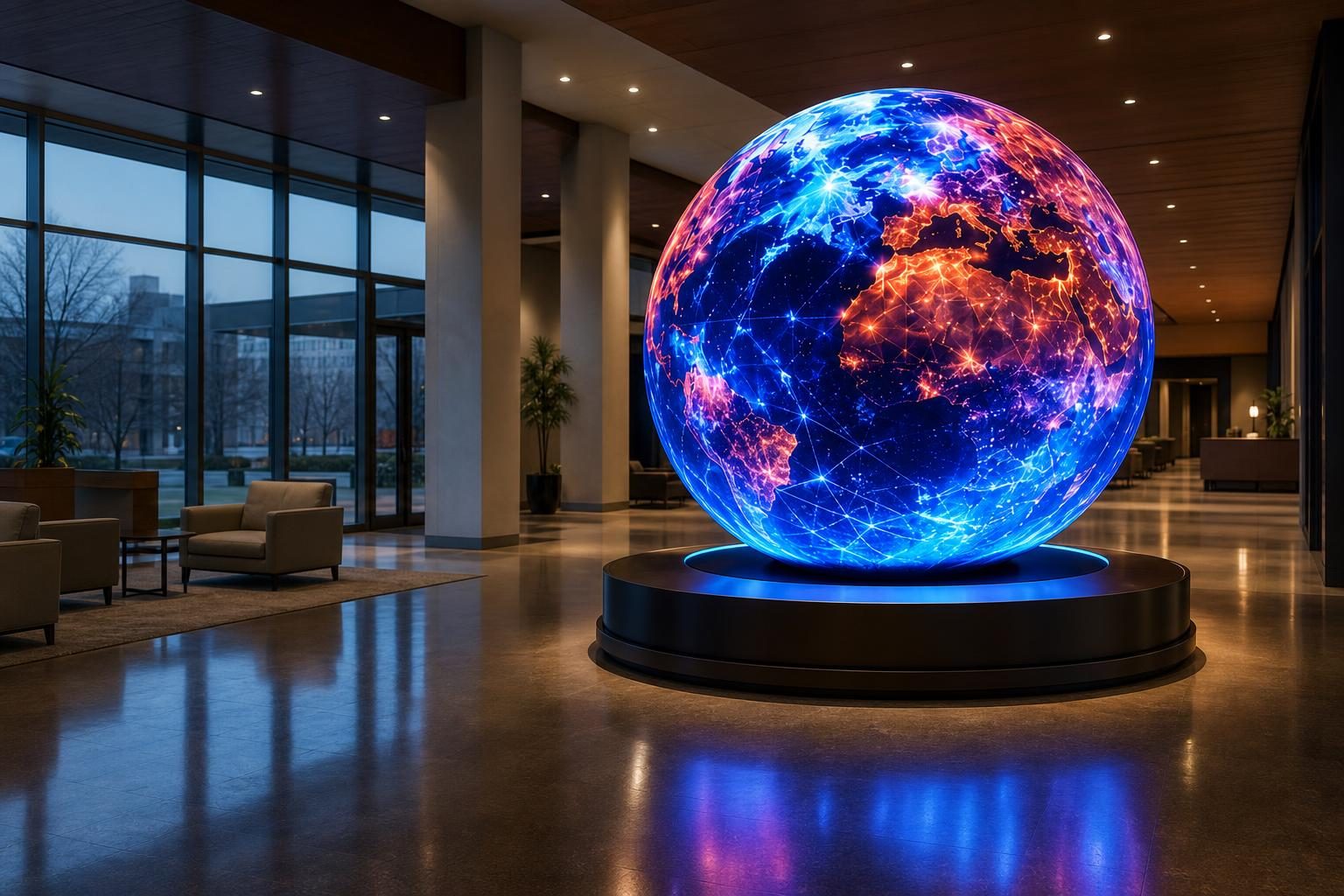
Innovative display technology is transforming how Pennsylvania’s venues, brands, and organizations capture attention and communicate complex ideas. An indoor digital sphere offers a striking, multidimensional solution for immersive messaging, digital art, brand storytelling, educational exhibits, and dynamic event environments. This advanced format may suit public-facing spaces, including convention centers, museums, corporate lobbies, and entertainment locations, where visual impact and audience engagement are essential.
Why Consider an Indoor Digital Sphere in Pennsylvania?
Pennsylvania is home to a diverse range of organizations and venues: bustling convention halls in Philadelphia and Pittsburgh, vibrant university campuses, interactive museums, multi-use corporate centers, luxury resorts, and retail flagships. In these environments, an indoor digital sphere can:
- Become an iconic visual centerpiece in lobbies, exhibit halls, or event venues
- Broadcast branded content or real-time announcements visible from all angles, maximizing reach
- Invite exploration and interaction in educational settings, such as science centers or university common areas
- Support immersive storytelling during seasonal events, product launches, or cultural programming
- Create shared, memorable experiences for visitors or staff
For business operators, marketers, educators, and event planners across Pennsylvania, investing in an indoor digital sphere can help amplify visual communication and foster deeper visitor engagement.
Use Cases and Impactful Applications for Indoor Digital Spheres
Indoor digital spheres are not simply static installations; they are dynamic communication tools capable of delivering high-impact visual experiences. Below are some primary use cases specifically relevant for Pennsylvania venues:
Convention and Trade-Show Environments
Major convention centers and event venues in Pennsylvania often seek to capture the attention of busy attendees. A centrally placed digital sphere can display rotating event schedules, exhibitor content, sponsorship graphics, or personalized welcome messages. Its spherical shape ensures that information is visible from all directions, turning the display into both a practical information hub and a conversation-starting landmark. Planners should consider sphere placement for optimal visibility from main circulation paths and design content for 360-degree viewing.
Museum and Science Center Exhibits
Interactive museums, science centers, and planetariums throughout cities like Philadelphia, Pittsburgh, Harrisburg, and Erie can utilize a digital sphere as an engaging platform for education. Visualizing geospatial data, astronomical phenomena, or environmental changes becomes more immersive when presented on a three-dimensional canvas. Content may include real-time weather data, animated planetary orbits, geological changes, or historical timelines, inviting visitors to interact, explore, and learn in new ways.
Educational and University Settings
Across Pennsylvania’s campuses, a digital sphere can become a signature element in student unions, libraries, or common areas. It can serve as a beacon for campus wayfinding, highlight upcoming events, visualize student achievements, or display student-created digital art. Integrating educational content—such as touch-interactive displays or collaborative visual projects—can also enrich the academic environment.
Corporate Headquarters and Visitor Centers
Corporate environments and company headquarters, especially those in Pennsylvania’s innovation hubs, benefit from the bold presence and versatile messaging of an indoor sphere. Uses include displaying real-time business metrics, welcome messages for visiting clients, product visualizations, or interactive data dashboards. A digital sphere can support storytelling for brand values, corporate history, or ongoing community initiatives. Collaboration with internal AV and IT teams is crucial for seamless integration.
Retail and Experiential Spaces
Retail flagships and experiential stores in urban centers can use digital spheres to create distinction. The display may showcase seasonal promotions, product launches, or immersive advertisements. The sphere’s ability to engage passersby from every angle expands brand reach within busy retail environments.
Hospitality, Resorts, and Entertainment Venues
In Pennsylvania’s luxury resorts, hotels, and casinos, a digital sphere creates a captivating centerpiece in hotel lobbies, reception halls, or entertainment spaces. These spheres can show ambient visuals, musical animations, event announcements, and even interactive guest features. Integration with lighting systems and guest service apps can elevate the overall guest experience.
Guidelines for Selecting the Right Indoor Digital Sphere
An effective indoor digital sphere deployment requires careful matching of product attributes to venue needs. Detailed planning helps ensure both visual impact and functional reliability. The following factors should be given special attention:
- Size and Placement: The diameter of the sphere should fit the available space while maintaining a balanced presence. Lobbies, exhibit spaces, and high-traffic areas are ideal. Consider ceiling clearance, nearby furnishings, pedestrian flow, and sightlines from multiple entrances.
- Viewing Distance: Locations where viewers are close require a high-resolution sphere to avoid pixelation. For larger open areas or high ceilings, a larger sphere at a lower resolution may suffice due to increased viewing distance.
- Content Strategy: Decide early if your application requires static branding, dynamic schedules, real-time data, artistic displays, or interactive content. Each application has unique requirements for content management and playback technology.
- Mounting Options: Select from floor-mounted bases, ceiling suspensions, or custom-built supports. Verify structural capacity for weight-bearing, ensure that electrical and data connections are reachable, and allow for future relocations or upgrades.
- Electrical, Data, and Environmental Considerations: Confirm electrical supply meets requirements. Plan for ventilation or cooling as necessary—especially within glass-walled or enclosed atrium spaces. Consider access to high-speed network infrastructure for reliable content updates or possible live data feeds.
- Safety and Regulatory Compliance: Factor in local building codes, ADA requirements, and any necessary permits. For venues that serve the public, plan for unobstructed walkways, protective barriers if needed, and appropriate fire safety distances.
- Service and Maintenance Access: Choose a location that allows technicians easy access for cleaning, diagnostics, and component replacement.
Detailed Installation and Planning Considerations
Installing an indoor digital sphere is a significant project that benefits from meticulous planning. Follow these steps to help ensure a smooth process for Pennsylvania venues:
- Start with a thorough site survey, recording ceiling heights, floor capacity, and existing infrastructure.
- Identify all possible sphere locations and model audience paths using simple floor plans or digital tools.
- Involve facilities, AV, and IT teams early in the planning process to ensure technical feasibility.
- Coordinate with venue architects to customize mounting systems and confirm compliance with building codes and safety standards.
- Map out electric circuits and ensure sufficient power for the projected display and control equipment. Factor in any additional power needs for auxiliary control stations.
- Review possible HVAC impacts, as heat generated by high-brightness digital spheres may need to be managed in smaller or enclosed spaces.
Environmental and Lighting Considerations
Optimizing the performance and longevity of your indoor digital sphere involves attention to environment and lighting:
- Assess existing lighting to minimize glare, unwanted reflections, or visible hotspots on the display’s surface. Digital spheres look best under controlled indirect lighting.
- For glass-walled atriums or rooms with large exterior windows, consider installing shading or adjustable lighting to preserve display visibility throughout the day.
- Maintain consistent ambient temperatures to help ensure reliable operation and prevent premature aging of digital components.
- Choose display and mounting materials that resist scratches and are easy to clean, especially in high-traffic or public-facing environments.
Performance, Material, and Longevity Factors
When choosing an indoor digital sphere, long-term performance and robustness should be factored into buying decisions:
- Durability: The display surface must be engineered for repeated use, accidental contact, and regular cleaning. Material coatings may be applied to improve resistance to smudging or scratching.
- Component Quality: High-quality internal components help ensure brightness, color fidelity, and operational consistency over time.
- Redundancy: For mission-critical or high-visibility applications, include redundancy in power and data feeds to minimize downtime.
- Flexibility: Look for platforms that support content upgrades, system expansion, or even remote diagnostics, enhancing future-proofing.
Comparison Guidance and Buying Criteria
When evaluating available indoor digital spheres, develop a matrix comparing the following criteria:
- Display Quality: Assess brightness, color accuracy, and viewing angles.
- Size Range: Evaluate available diameters and how each fits your intended space.
- Resolution: Match pixel density with your expected viewing distance.
- Mounting Flexibility: Confirm suitability for floor, ceiling, or custom design installations.
- Software Capabilities: Compare ease of content scheduling, playback, and input options.
- Total Cost of Ownership: Estimate initial costs, installation, maintenance, and ongoing operational needs.
Common Mistakes to Avoid When Planning an Indoor LED Sphere
- Overlooking ceiling height, floor space, or access limitations during early planning stages
- Selecting a resolution that does not match typical viewing distances or intended content
- Underestimating the time and skill required for 360-degree content creation and updating
- Neglecting the need for routine operational oversight or assignment of update responsibility
- Assuming all venues are technically compatible without confirming structural and electrical needs
- Forgetting compliance with local permitting or fire safety requirements
Future Trends in Indoor Digital Spheres
- Continued advances in digital display technology are propelling spheres toward ever-higher resolution and more seamless visual experiences.
- Interactive features—such as gesture or touch sensors—are emerging, allowing audiences to influence displayed content in real time (product dependent).
- The integration of real-time data visualization is gaining traction, supporting data-driven storytelling for museums, corporate lobbies, and educational institutions.
- Compatibility with new media formats and immersive audiovisual content is expanding the potential use cases for digital spheres beyond traditional signage or advertising.
- Environmentally conscious designs are leading to more energy-efficient, recyclable components and low-impact manufacturing.
Content Ideas for Pennsylvania Venues and Organizations
- Abstract digital art inspired by Pennsylvania’s changing seasons or local landscapes, designed for continuous 360-degree motion.
- Brand identity animations telling the story of local business achievements or community initiatives through motion graphics.
- Dynamic event welcome messages, countdown clocks, or real-time event updates during large conferences or seasonal programming.
- Visualizations of educational, scientific, or civic data, curated in partnership with local universities or public organizations.
- Rotating schedules showcasing main speakers, daily highlights, or room assignments at multi-day conventions or trade shows.
- High-resolution promotional trailers for Pennsylvania tourist destinations or regional events, scheduled throughout the day.
- Spotlights on regional artists, musicians, student accomplishments, or philanthropic campaigns.
Each content idea should be tailored to your technical platform, venue audience, and brand or mission objectives. Engage with creative professionals and technical partners early to bring your vision to life.
Frequently Asked Questions (FAQ)
- Is the indoor digital sphere suitable for all interior Pennsylvania venues?
- The sphere’s suitability depends on your venue’s structural, electrical, and spatial constraints. Always review specific site conditions and project goals before proceeding. Factors such as ceiling height, floor loading, available power, and desired audience experience should be assessed.
- What technical information should I prepare before requesting a quote?
- To speed up the quoting and planning process, gather your venue’s floor plan and exact space dimensions, ceiling height, intended placement, viewing distances, content objectives, typical audience size, and any operational constraints (such as restricted hours for installation). Providing as much detail as possible allows for more accurate recommendations.
- How does viewing distance affect indoor digital sphere selection?
- Viewing distance is critical to display quality. The closer the audience, the finer the pixel resolution necessary for clear imagery. For large open spaces, consider that some content may be most visible from 10 or more feet away, while installations in compact spaces demand higher surface detail.
- Are content creation and management tools included?
- Content creation and management tools vary by product; some support advanced scheduling and live data connections, while others require direct upload of pre-produced visuals. Confirm included features and compatible file formats with your provider.
Contact LEDDisplayWarehouse.com
LEDDisplayWarehouse.com sells LED display products, including indoor digital spheres. Contact us here to ask questions or request a quote.